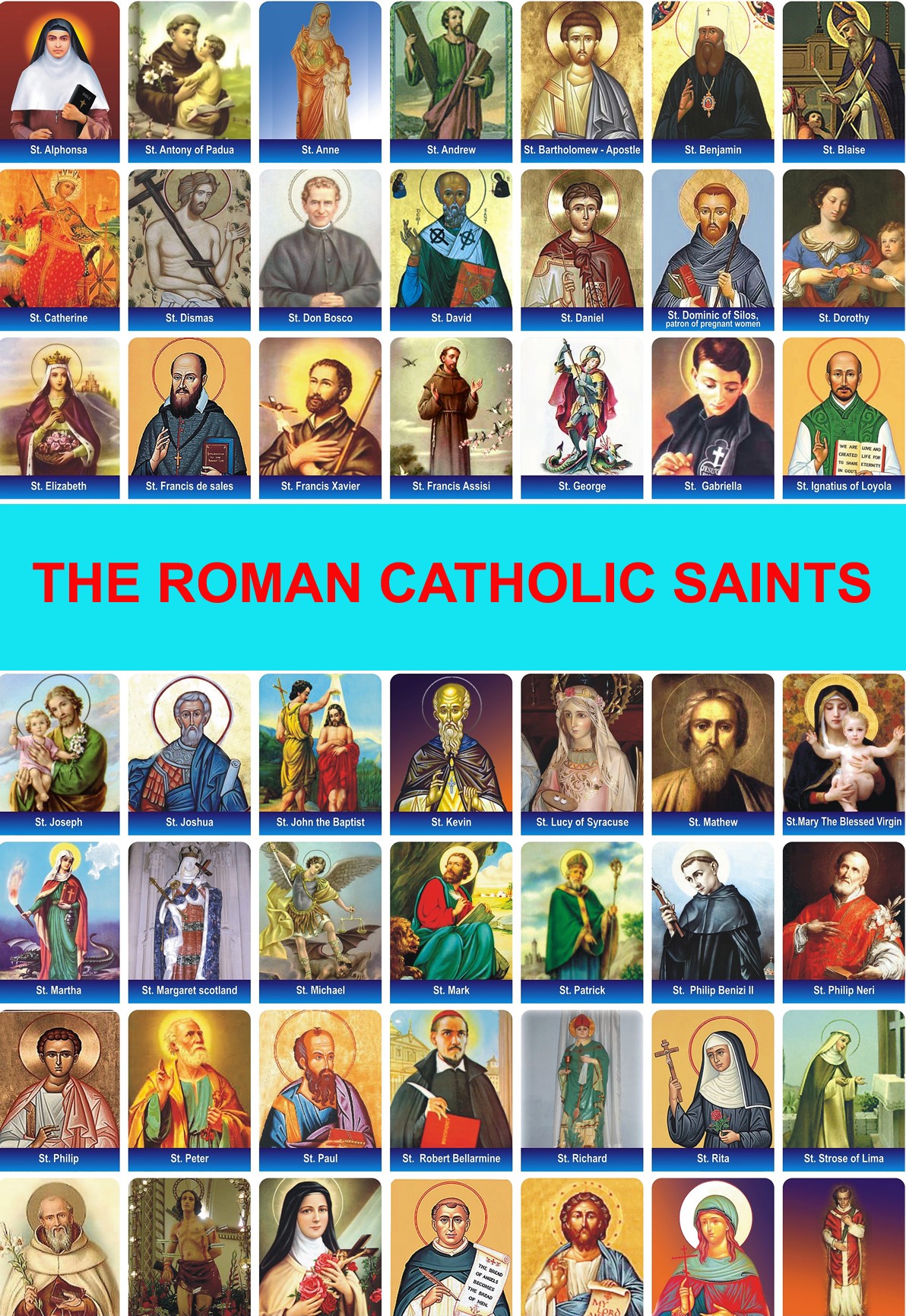
The Roman Catholic Saints
by K Hitlar
About the Author
The book “The Roman Catholic Saints” have collected and compiled by me from the Catholic Company having more than 20 years (since 2001) of faithful service. I have been receiving a brief life history of a Saint daily in my email more than 2 years from the Catholic Company under the heading “Morning Offering”. It is really a blessing to me to publish this Holy book on my 71st birthday on 03.06.2023. In religious belief, a saint is a person who is recognized as having an exceptional degree of holiness, likeness, or closeness to God. The English word saint comes from the Latin sanctus, with the Greek equivalent being ἅγιος (hagios) 'holy' The word ἅγιος appears 229 times in the Greek New Testament, and its English translation 60 times in the corresponding text of the King James Version of the Bible. According to the Catholic Church, a saint may be anyone in Heaven, whether recognized on Earth or not, who forms the "great cloud of witnesses"
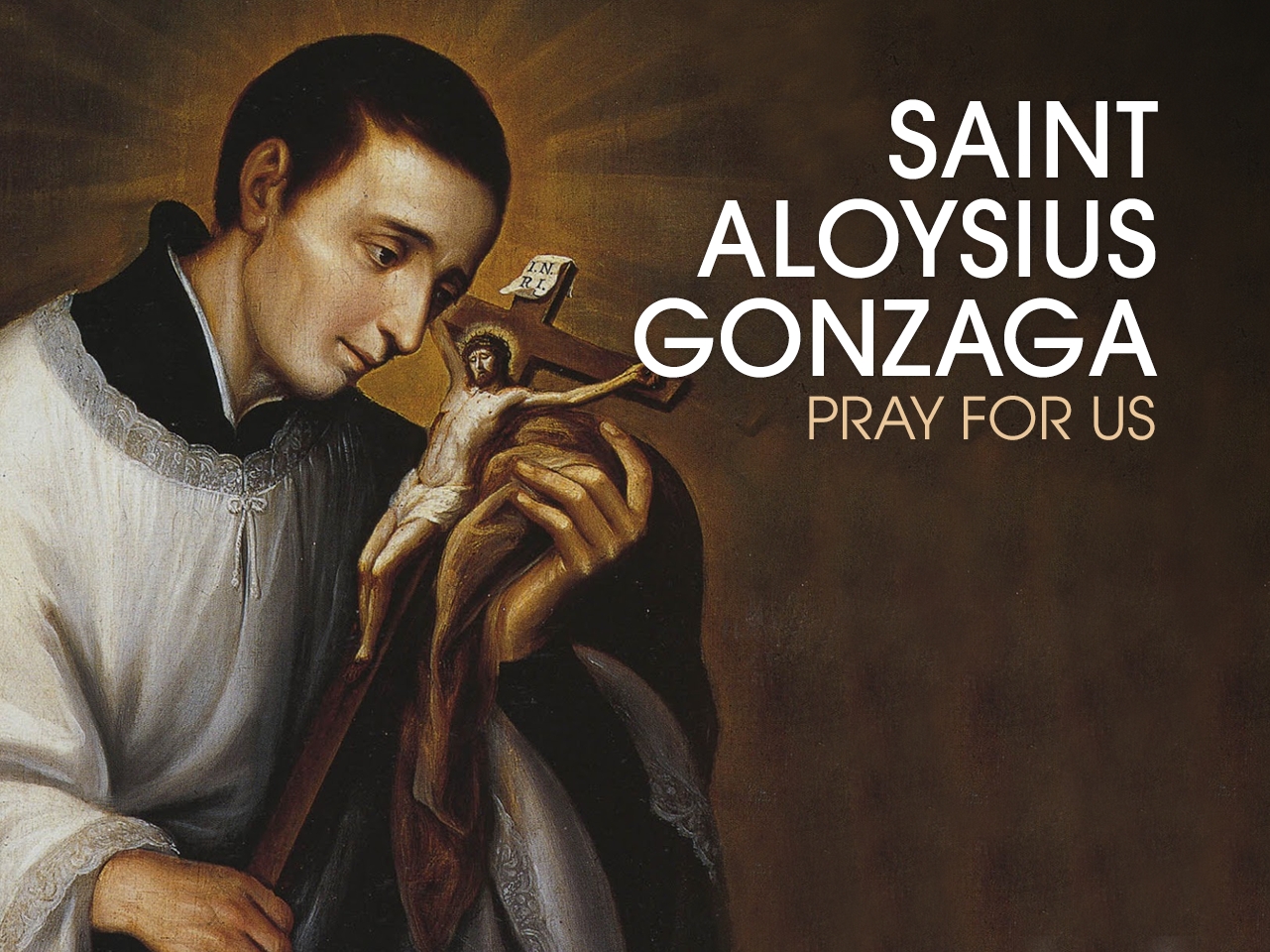
St. Aloysius Gonzaga
St. Aloysius Gonzaga (1568–1591) was born to a noble Italian family, the eldest of seven children, and was destined for the military. However, by the time he was nine years of age he chose the religious life and made a personal vow of chastity. As a safeguard against sexual temptation he always kept his eyes downcast in the presence of women. Although many tried to dissuade him from his chosen vocation, he was eventually allowed to renounce his inheritance and enter the seminary in order to become a Jesuit priest. While he was studying in Rome, there was an outbreak of the plague. Aloysius volunteered to care for the sick, despite the delicateness of his own health. As a result, he contracted the disease and died at the age of twenty-three, before completing his priestly studies. St. Aloysius was connected with two great figures of the Counter-Reformation: he received his First Holy Communion at the age of twelve from St. Charles Borromeo, and his Last Rites from St. Robert Bellarmine, both of whom served as his spiritual advisers. On the night of his death, St. Mary Magdalene de Pazzi had a vision of him being received into great glory. St. Aloysius Gonzaga is the patron saint of youth and bodily purity. His feast day is June 21st.
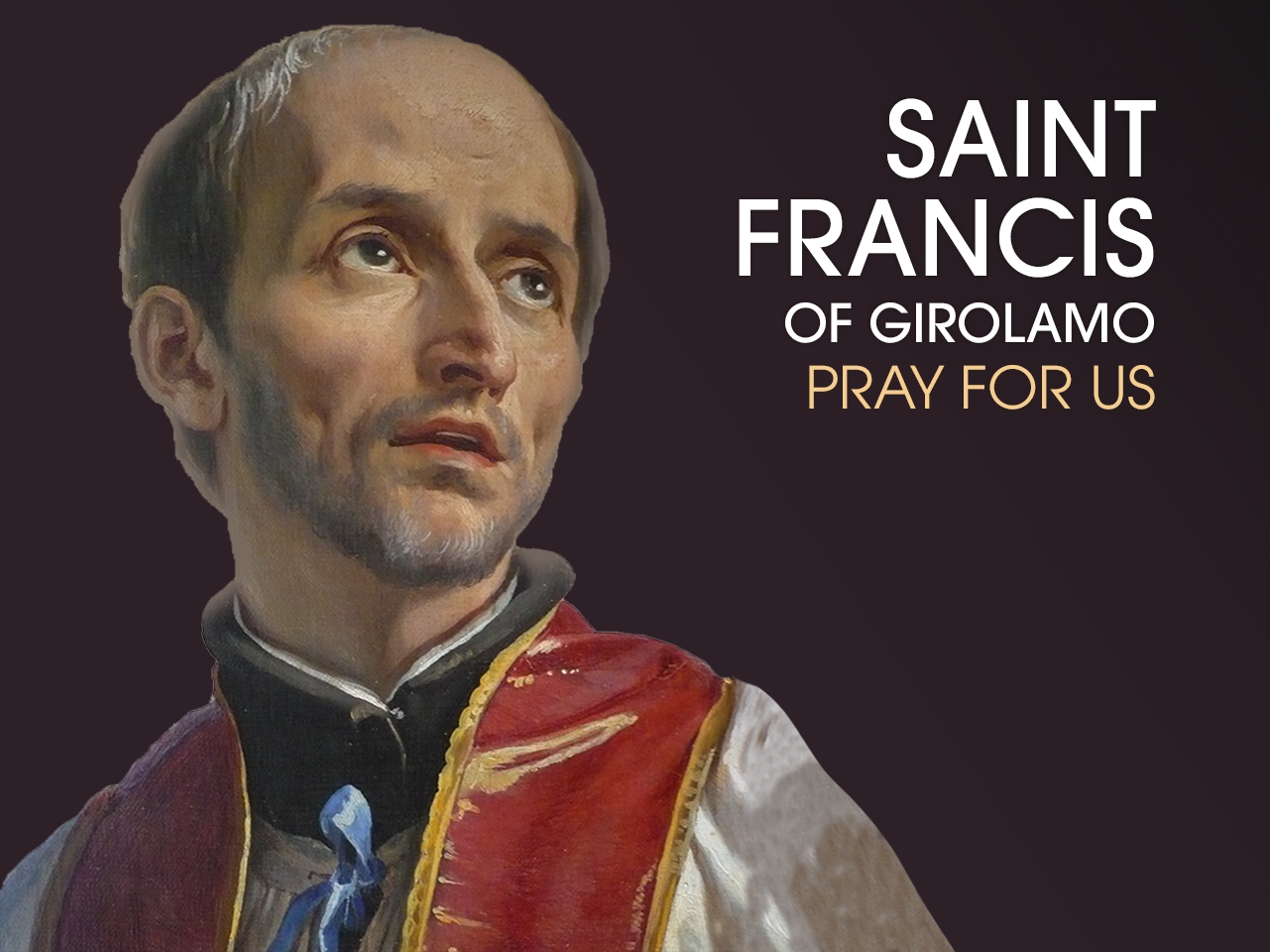
St. Francis de Girolamo
St. Francis de Girolamo (1642-1716) was the eldest of eleven children born to honorable and virtuous parents in Naples, Italy. As a child he was drawn to God and a life of prayer. Realizing his vocation to Holy Orders, he was ordained a Jesuit priest at the age of 28. He became a renowned public preacher due to his distinguished and eloquent voice. He was described as "a lamb when he talks, and a lion when he preaches." He had a heart for the missions after his patron St. Francis Xavier, but instead of traveling to distant lands he accepted his hometown of Naples as his India. He went as a missionary priest into country towns and villages for open-air preaching in the streets. He sought to convert sinners wherever they were—in brothels, prisons, galleys, hospitals, and asylums—as well as instructing the pious in their religious houses. He converted Muslim prisoners of war to the Christian faith, rescued children from dangerous and degrading situations, and opened a pawn shop for charity. The fruit of his labor was abundant. He converted many souls, even hardened sinners, and made them virtuous. Everyone knew him for his holiness and zeal. He also had a reputation for being a miracle worker during his lifetime and after his death. After spending 40 years in apostolic labor in Naples, he died of an illness from which he suffered greatly without complaint. His feast day is May 11th.
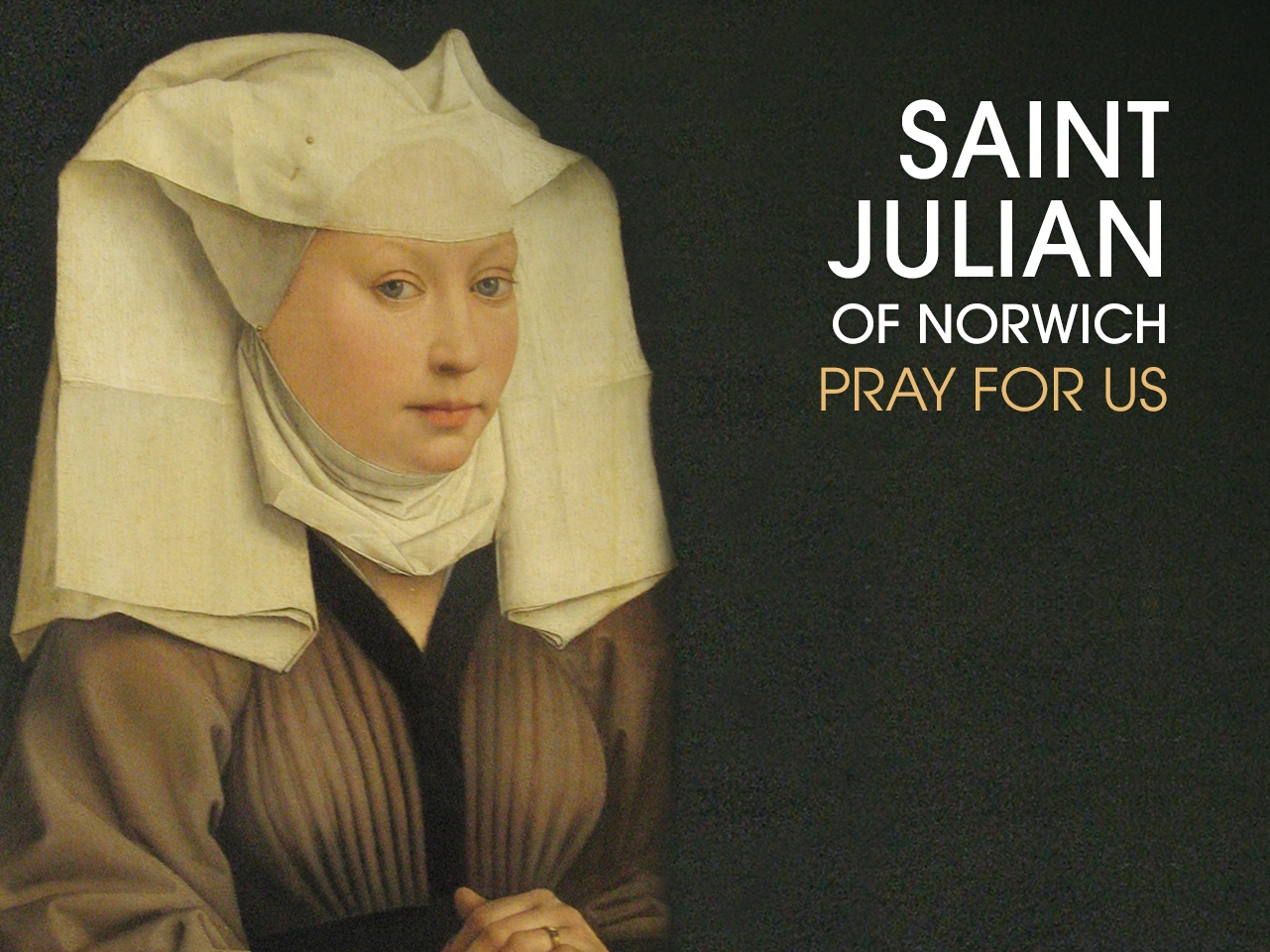
St. Julian/Juliana of Norwich
St. Julian/Juliana of Norwich (1342–1416) is a Benedictine nun who lived as a recluse in Norwich, England. Little is known of her life with certainty. At the age of 30 she was suddenly struck by a severe illness which almost took her life. During this illness she received a series of visions of Jesus Christ in sixteen separate revelations. When she recovered from her illness the visions stopped. Fifteen years later, Our Lord appeared to her to give her the meaning of her visions. St. Julian wrote her visions down in a book called Revelations of Divine Love, the earliest surviving book in the English language known to have been written by a woman. After these revelations she began to live a solitary life as an anchoress in a little cell built into the wall at the church of St. Julian in Norwich, not far from London. During her life the Church was in schism, and England was caught in a long war with France. The book contains a message of optimism based on the certainty of being loved by God and of being protected by his Providence. She received visitors to her cell and gave them guidance on the spiritual life, becoming a spiritual mother to many. St. Julian is an important medieval mystic whose response to the problem of evil is cited in the Catechism of the Catholic Church. Her feast day is May 13th.
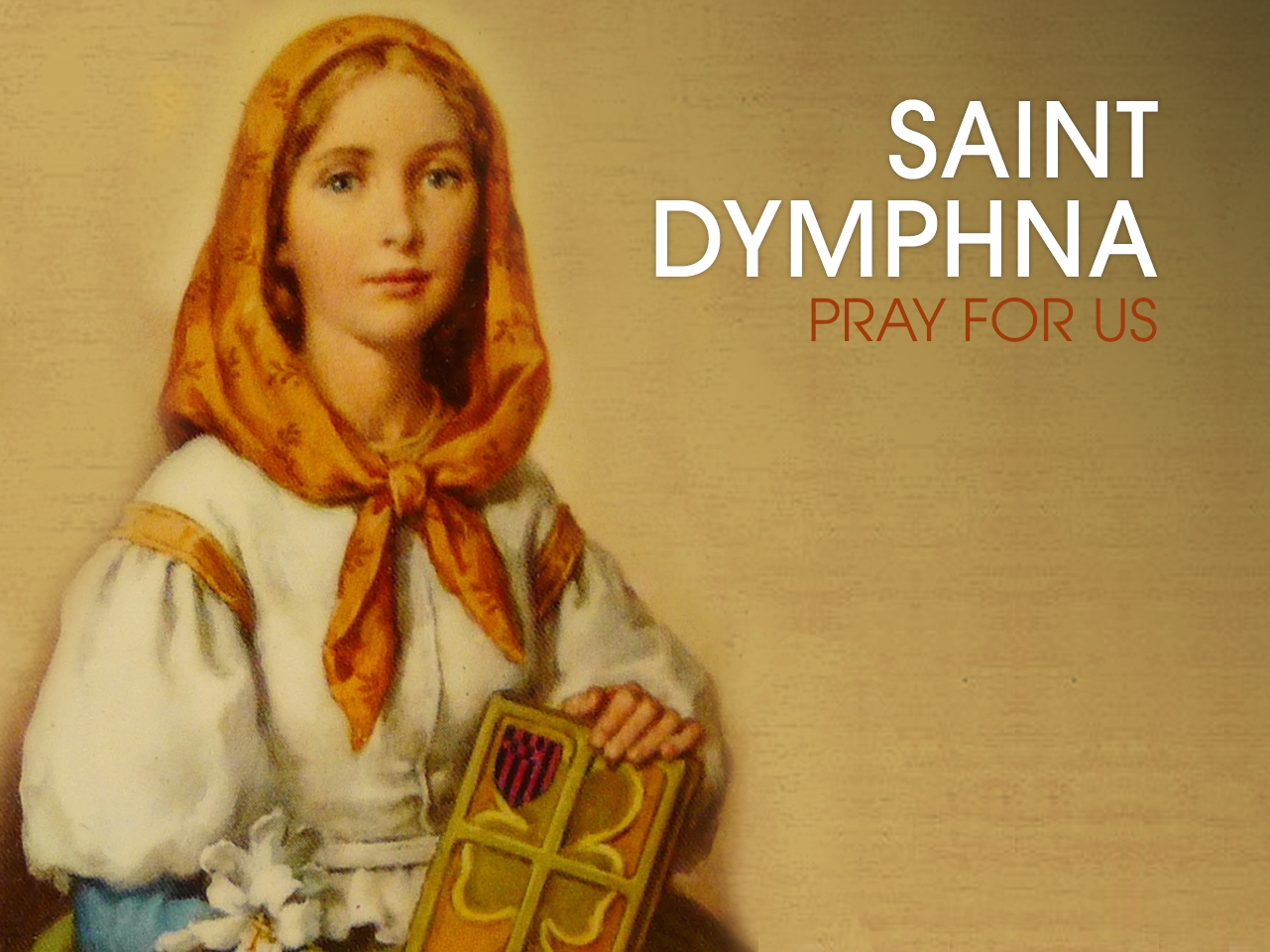
St. Dymphna
St. Dymphna (7th c.) was the daughter of a pagan Irish chieftain and a beautiful Christian noblewoman. Dymphna was raised as a Christian, and she consecrated her virginity to Christ at a young age. Dymphna's father loved his wife deeply. When her mother died, Dymphna's father was so overcome with grief that he became mentally unstable. Unable to find another suitable wife of equal character and beauty to his first wife, he attempted to marry Dymphna due to her close resemblance to her mother. Upon learning of his wicked plan, Dymphna fled across the sea into Belgium along with her tutor and confessor, Father Gerebran. Her father pursued them and eventually discovered their location by tracing the foreign money they used along the way. He killed Dymphna's confessor and pleaded with his daughter to return with him to Ireland to be his wife. When she refused, he cut off her head in a mad rage. St. Dymphna's church still stands on the place of her burial near Antwerp. There have been numerous accounts of those afflicted with epilepsy and mental illness visiting her tomb and receiving miraculous cures through her intercession. Because of this, St. Dympha is the patroness of those suffering from mental and neurological disorders and illnesses, as well as of mental health professionals. Her feast day is May 15th.
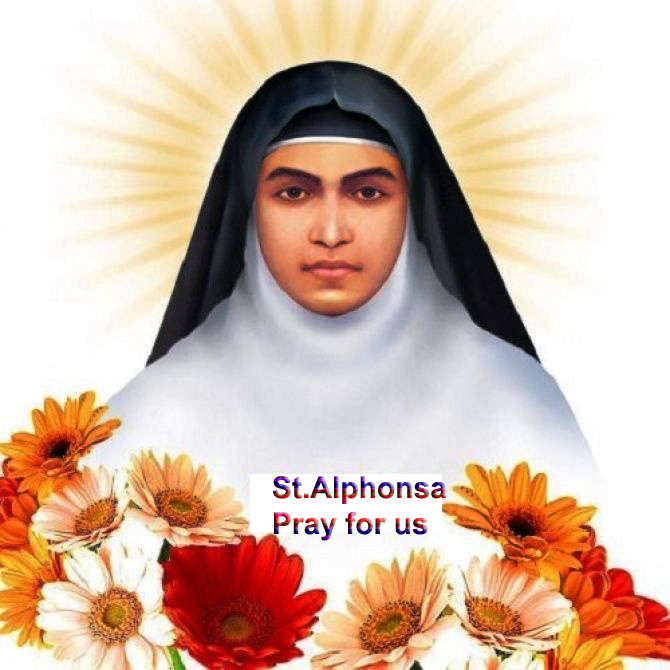
St. Alphonsa
Alphonsa of the Immaculate Conception or Marth Alphonsa, christened at birth as Anna Muttathupadathu (19 August 1910– 28 July 1946), was a nun and an educator by profession. She is the first woman of Indian to be canonized as a saint after decades of enquiry by the Sacred Congregation for the Causes of Saints, she is also the first saint of the Syro-Malabar Church, an Eastern Catholic community of Eastern Christianity. In the 1990s, a postal stamp commemorating Alphonsa was published by Kerala state's former minister, K Karunakaran. Alphonsa was born on 19 August 1910 and was baptized on 27 August. She was locally known as Alphonsamma. The period 1930–1935 was characterised by grave illness. Alphonsa took her permanent vows on 12 August 1936. She was often sick. In December 1936, it is claimed that she was cured from her ailments through the intervention of Kuriakose Elias (who was beatified at the same ceremony as she), but on 14 June 1939 she was struck by a severe attack which left her weakened. On 18 October 1940, a thief entered her room in the middle of the night. This traumatic event caused her to suffer amnesia and weakened her again. After a series of serious health problems, she died on 28 July 1946, at a young age of 35. She was buried at St. Mary's Catholic Church, Bharananganam, Kottayam district. On Sunday, 12 October 2008, Pope Benedict announced at a ceremony Saint Peter's Square